
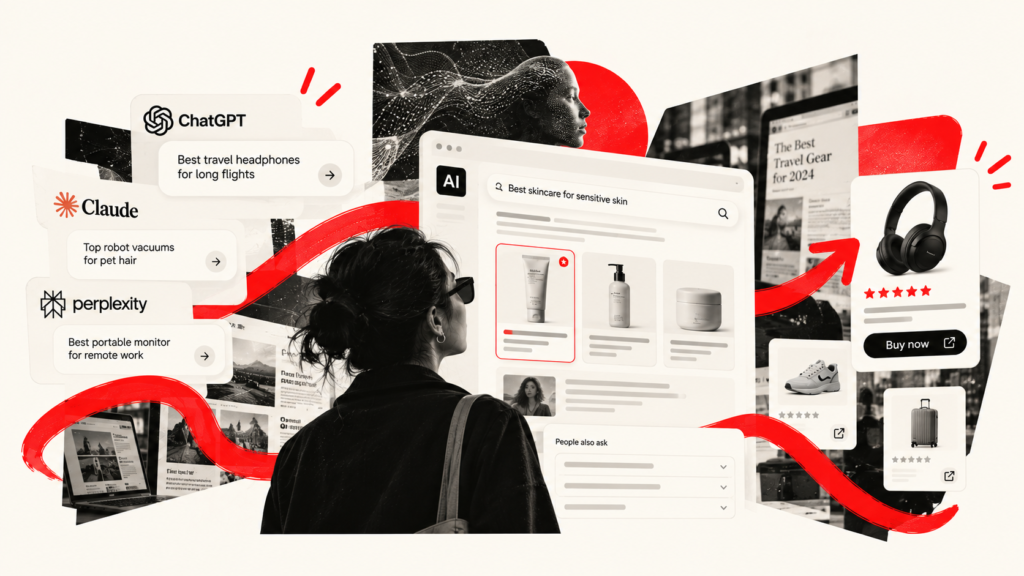
Shoppers are starting to ask AI instead of searching. Google now answers many queries with AI-generated summaries, ChatGPT recommends products in conversation, and AI assistants are beginning to complete purchases on the shopper’s behalf. For brands and affiliate publishers, this is the biggest change to product discovery in a decade.
Here is what is changing, what the evidence says so far, and what it means for your affiliate strategy.
What is changing
Google’s AI summaries
Google’s AI Overviews and AI Mode summarise answers at the top of search results. A Pew Research Center study of 68,879 Google searches by 900 US adults in March 2025 found that about one in five searches produced an AI summary. When a summary appeared, users clicked a traditional search result in 8% of visits, compared with 15% when there was no summary. They clicked a link inside the summary itself in just 1% of visits, and were more likely to end their browsing session altogether (26% vs 16%).
Shopping inside AI
In November 2025, Google launched new AI Mode shopping features in the US, including agentic checkout, where Google can complete a purchase on a merchant’s site using Google Pay after the shopper confirms. Google says its Shopping Graph covers more than 50 billion product listings.
In September 2025, OpenAI introduced Instant Checkout in ChatGPT for US users, starting with Etsy sellers and planned for Shopify merchants, alongside an open standard for AI-driven purchases called the Agentic Commerce Protocol. OpenAI said more than 700 million people use ChatGPT each week and that its product results are organic and unsponsored. By March 2026, OpenAI was reported to be revamping its shopping experience after Instant Checkout struggled, which shows how quickly this area is still evolving.
What it means for affiliate publishers
- Fewer clicks from generic searches. Simple questions increasingly get answered on the results page, which reduces traffic to thin content.
- Trusted, original reviews matter more. AI systems draw on sources they consider credible. Publishers with genuine hands-on testing, expert opinion and strong brands are best placed.
- Diversification. Publishers are leaning into newsletters, communities, video, apps and loyalty to build direct relationships with audiences, and brands should follow them there.
What it means for brands
1. Your reputation across the web now shapes AI answers
AI assistants summarise what trusted sources say about you. Coverage in respected reviews and buying guides, consistent product information and genuine customer reviews all feed into how you are described. This makes the work of earning editorial coverage even more valuable. See how to get your product into “best of” buying guides.
2. Product data must be clean and complete
AI shopping tools rely on structured product data: titles, specifications, prices, availability, images and reviews. Make sure your product feeds, marketplace listings and website are accurate and consistent in every market.
3. Diversify your partner mix
Do not rely on one type of partner. Combine editorial publishers with creators, newsletters, communities, loyalty and cashback platforms, and closed user groups that reach audiences directly rather than through search.
4. Measure more than the last click
If AI summaries influence decisions without a click, some of the value of your partners will not show up in last-click reports. Look at new-customer share, brand search trends and incrementality testing to judge which partners truly drive growth.
5. Watch the new commerce standards
As AI assistants start completing purchases, questions about attribution and commission are still being worked out across the industry. Stay close to your tracking platform and partners so you can adapt as standards develop.
Why this is good news for Chinese brands with great products
AI-driven discovery can reward the best product for a need, not just the best-known brand. A Chinese brand with stronger specifications or better value, backed by credible reviews and clean product data, can appear alongside established names. The brands that win will be those that invest in trust: real reviews, respected publishers and clear information. That is exactly what a well-run affiliate and publisher programme builds.
Red Thread helps Chinese brands earn that trust in Western markets. See our services or book a call.
Want to be recommended by the sites AI tools trust? Our Western publisher partnerships service gets Chinese brands onto the review and buying-guide sites that shoppers, and AI assistants, rely on.
FAQs
Will AI search kill affiliate marketing?
Unlikely. It is changing where discovery happens and reducing clicks from simple searches, but trusted recommendations matter more than ever. Affiliate is adapting towards stronger publishers, creators, communities and direct audience relationships.
How do I get my brand recommended by AI assistants?
There is no shortcut. Earn coverage from trusted publishers, collect genuine reviews, and keep your product information accurate and consistent everywhere it appears.
Should brands still invest in SEO?
Yes, but with a focus on genuinely useful, original content and structured product information, rather than thin pages that AI summaries can easily replace.
Sources
- Pew Research Center: Google users are less likely to click on links when an AI summary appears (July 2025)
- Digital Commerce 360: Google debuts agentic checkout and AI Mode shopping features (November 2025)
- OpenAI: Buy it in ChatGPT – Instant Checkout and the Agentic Commerce Protocol (September 2025)
- CNBC: OpenAI revamps shopping experience in ChatGPT after struggling with Instant Checkout (March 2026)